
How to Create a Beginner-Friendly Home Altar
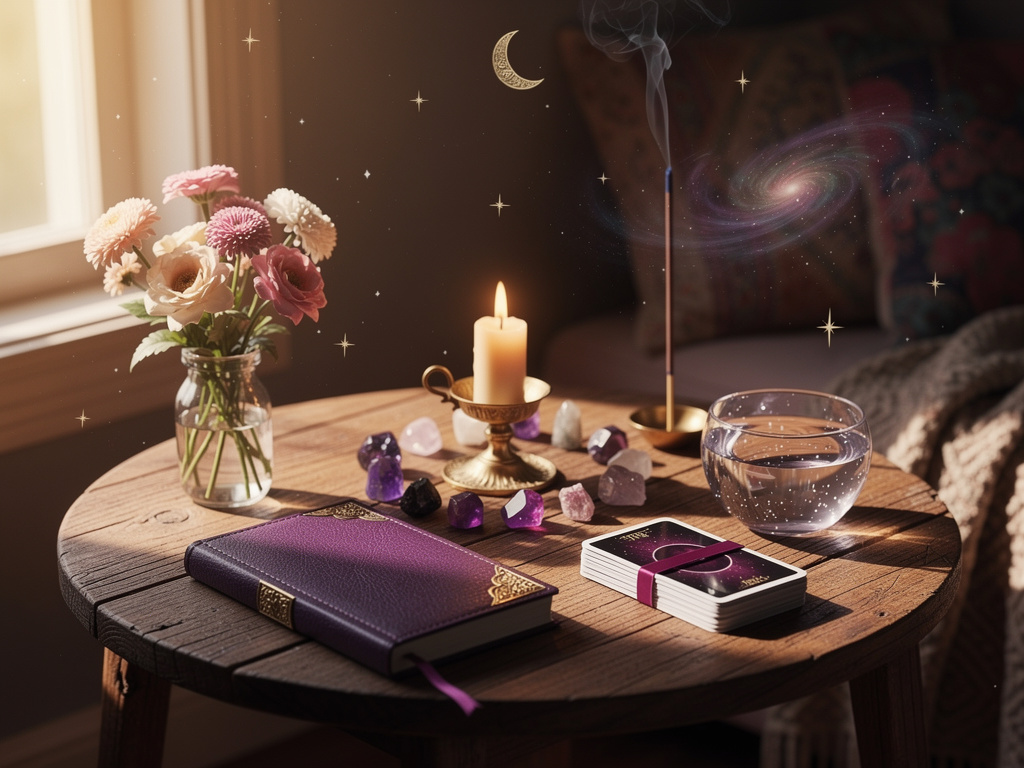
Learn how to create a simple home altar with meaningful tools, easy setup steps, and spiritual practices that feel grounded and personal.
If you have been curious about creating a home altar but felt unsure where to begin, you are not alone. Many new practitioners assume an altar needs to be elaborate, expensive, or perfectly styled to be meaningful. The truth is much simpler: an altar is just a dedicated space for intention. It can help you pause, reflect, pray, pull tarot, honor the moon, connect with your ancestors, or return to yourself after a long day. A beginner-friendly home altar should feel personal, supportive, and easy to use, not intimidating. Here is a simple way to build one that fits your life and your practice.
What a home altar is really for
At its core, a home altar is a small sacred space that holds focus. Think of it as a spiritual touchstone in your home. Some people use an altar for meditation or candle magic, while others use it for seasonal celebrations, moon rituals, divination, or daily gratitude. There is no single correct purpose. Your altar can evolve as your practice grows.
What matters most is that the space helps you feel connected. A useful altar is one you will actually return to. That may mean keeping it beautifully simple instead of filling it with tools you are not ready to use yet.
Choose the right spot
Start by choosing a space that feels calm and practical. This could be the corner of a dresser, a shelf, a nightstand, the top of a small cabinet, or even a windowsill. If you share your home or need privacy, your altar can live inside a box, on a tray, or in a drawer that opens when you are ready to practice.
- Pick a spot where you can sit or stand comfortably for a few minutes.
- Choose a place that is safe for candles or incense if you plan to use them.
- Keep it reasonably tidy so the space feels intentional.
- If possible, avoid placing it somewhere that feels rushed or chaotic.
A permanent altar is lovely, but a temporary altar is just as valid. If flexibility helps you stay consistent, that is a wise choice, not a lesser one.
Start with a few meaningful basics
You do not need every metaphysical tool at once. For a beginner altar, a few meaningful items are more than enough. Choose objects that help you focus and that carry personal significance.
- A cloth, tray, or small surface covering to define the space
- A candle for light, clarity, or presence
- A small bowl of water or salt for cleansing or balance
- A crystal, stone, or natural object that feels grounding
- A journal or small notepad for reflections, prayers, or card pulls
- A tarot or oracle deck, if divination is part of your practice
- Fresh flowers, herbs, or seasonal items to bring in natural energy
If you work with elemental symbolism, you might include one item for each element: earth, air, fire, and water. But this is optional. Some people also like to place photos of ancestors, spiritual icons, or symbols of deities they honor. If that is not part of your path, there is no need to force it.
Build your altar with intention
Once you have gathered a few items, arrange them in a way that feels balanced to you. There is no universal layout, but it can help to place the item you use most often in the center. That might be a candle, a crystal, or a small symbol of your intention.
A simple setup formula
- Lay down your cloth or place your tray.
- Choose a centerpiece, such as a candle or favorite spiritual object.
- Add one or two support items, like a crystal and a bowl of water.
- Include one personal item, such as a journal, photo, or charm.
- Leave a little open space so the altar does not feel crowded.
As you place each item, pause for a moment and think about why it belongs there. This small act of attention can be more powerful than any complicated ritual. Your intention is what makes the space sacred.
Your altar does not have to impress anyone. It only has to support your connection.
Cleanse and dedicate the space
Before using your altar, you may want to cleanse the space and dedicate it. This does not need to be dramatic. A gentle energetic reset can help mark the transition from ordinary space to sacred space.
- Wipe down the surface with care.
- Light incense, a candle, or use sound like a bell or chime.
- Sprinkle a little water or salt nearby if that fits your practice.
- Take three slow breaths and state your intention aloud.
You might say something like, "I dedicate this space to peace, clarity, growth, and grounded practice." Keep it simple and sincere. If you prefer, say it silently.
Ways to actually use your altar
A beautiful altar becomes more meaningful through regular use. You do not need a long ritual every day. Even five minutes can help you build a steady relationship with the space.
- Light a candle in the morning and set an intention for the day.
- Pull one tarot or oracle card and journal about it.
- Sit quietly for a few breaths before bed.
- Leave a small offering such as water, herbs, or a flower.
- Update the altar with moon phases, sabbat decor, or seasonal items.
- Speak a prayer, affirmation, or gratitude practice aloud.
If you miss a day or a week, that is okay. Spiritual practice is not about perfection. It is about returning when you are ready.
Common beginner mistakes to avoid
One of the biggest beginner mistakes is overcomplicating the altar from the start. It is easy to feel pressure from social media or books that show large, highly styled setups. But more tools do not automatically create a deeper practice.
- Do not buy items just because you think you are supposed to have them.
- Do not place unsafe candle or incense setups in tight spaces.
- Do not clutter the altar so much that it becomes hard to use.
- Do not compare your altar to someone else’s path or aesthetic.
- Do not be afraid to change the setup as you learn more about yourself.
Your altar can be minimal, seasonal, colorful, neutral, devotional, magical, or meditative. Let it reflect your real life and your real needs.
Let your altar grow with you
As your practice deepens, your altar may shift naturally. You might add tools for moon work, candles in corresponding colors, herbs for spellwork, astrology symbols, or items for sabbats and esbats. You may also discover that less is more and simplify over time. Both are signs of growth.
The most important thing is to build a space that helps you feel centered, curious, and supported. A beginner-friendly home altar is not a test you pass. It is an invitation to create a relationship with your spiritual practice, one small choice at a time.
If you are ready to create your own altar, whether a traditional one or one that reflects your individual path, we would love to help you find tools that feel meaningful and approachable. Visit Mystic Nook in Chattanooga for candles, crystals, tarot decks, altar decor, and friendly guidance for wherever you are on your path.
Come explore in person
Visit Mystic Nook in Chattanooga for crystals, ritual tools, readings, and welcoming community gatherings — or reach out with your questions.