How to Ask Better Tarot Questions for Clear Readings
Learn how to ask clear, grounded tarot questions that lead to useful insights. A beginner-friendly guide to better tarot readings.
One of the biggest secrets to getting a helpful tarot reading has less to do with memorizing card meanings and more to do with the question you ask. If you have ever pulled cards and felt like the answer was vague, confusing, or way off, your question may have been too broad, too fixed, or too emotionally loaded in the moment. The good news is that asking better tarot questions is a skill, and it is one that beginners can learn quickly. With a little intention, you can turn a frustrating reading into a grounded conversation with your deck that offers real insight, practical next steps, and space for your intuition to speak.
Why your tarot question matters
Tarot works beautifully as a tool for reflection, clarity, and perspective. It tends to respond best when you invite guidance instead of demanding certainty. Questions that are rigid, all-or-nothing, or focused on controlling other people often lead to muddy answers. Questions that are open, specific, and centered on your own choices usually create much clearer readings.
Think of tarot less like a machine that spits out yes-or-no fate and more like a wise mirror. The way you phrase your question shapes what that mirror reflects back. A strong tarot question helps you move from What will happen to me? toward What can I understand, shift, or do next?
What makes a good tarot question
A good tarot question is open-ended, focused, and honest. It leaves room for nuance and helps you explore your own energy, behavior, options, or lessons. It does not need to sound formal or mystical. It just needs to be clear.
- Open-ended: invites insight instead of a one-word answer
- Specific: focuses on one situation at a time
- Present-centered: looks at the energy around the issue now
- Empowering: brings attention back to your choices and agency
- Compassionate: asks from curiosity rather than panic
Questions that often lead to confusing readings
There is no need to judge yourself if these are the kinds of questions you naturally ask at first. Most of us start there. But if you notice your readings feel repetitive or unhelpful, try adjusting the wording.
- Will I get the job?
- Does my ex still love me?
- When will I meet my soulmate?
- Is this person lying to me?
- What will happen next in my life?
These questions are understandable, but they often put tarot in the position of predicting fixed outcomes or reading someone else’s inner world. That can limit the depth of the reading and leave you feeling stuck.
How to reframe a tarot question
A simple reframe can make all the difference. Instead of asking for certainty, ask for insight. Instead of focusing on another person’s mind, focus on your own path. Instead of asking only what will happen, ask what you need to know.
Examples of better tarot questions
- Instead of Will I get the job? ask What energy surrounds this job opportunity, and how can I show up well in the process?
- Instead of Does my ex still love me? ask What do I need to understand about this connection so I can move forward in a healthy way?
- Instead of When will I meet my soulmate? ask What can I do now to become more open to a loving, aligned relationship?
- Instead of Is this person lying to me? ask What am I picking up in this situation, and what should I pay attention to?
- Instead of What will happen next? ask What should I know about the path unfolding in front of me right now?
A simple formula for beginner-friendly tarot questions
If you are not sure where to start, use this easy formula: What do I need to know about ___, and how can I best navigate it? This gives your reading both insight and action. It works for relationships, work, decisions, creative blocks, family issues, and personal growth.
The best tarot questions do not give your power away. They help you hold it with more clarity.
Questions you can use right away
Here are a few grounded tarot questions that tend to produce useful readings, especially for newer readers.
- What do I need to understand about this situation?
- What am I not seeing clearly right now?
- What energy am I bringing into this?
- What is supporting me at this moment?
- What challenge should I be aware of?
- What lesson is available to me here?
- How can I move forward in a healthy and aligned way?
- What next step would be most helpful?
Before you pull cards, pause for a moment
A rushed reading often creates a rushed question. Before shuffling, take one minute to settle in. Breathe, put your feet on the floor, and ask yourself what you truly want from the reading. Are you seeking reassurance, clarity, permission, or practical guidance? Naming that honestly can help you shape a better question.
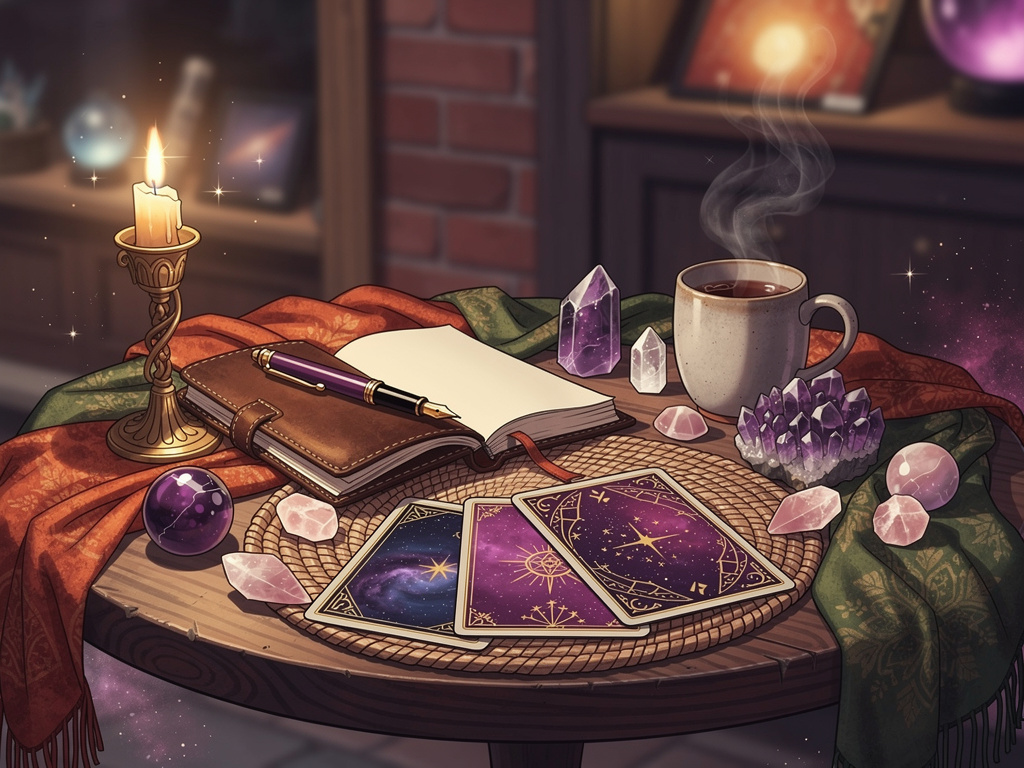
It can also help to write your question down in a journal before you pull any cards. Seeing it on paper lets you notice if it is too broad or emotionally tangled. If needed, rewrite it until it feels clear and kind.
What to do if your question still feels messy
Sometimes the truth is that you are too overwhelmed to form a perfect question, and that is okay. Tarot can still meet you there. If your mind is spinning, start with one of these gentle prompts:
- What do I need most right now?
- What would help bring me clarity?
- What energy is most important for me to work with today?
- How can I support myself through this moment?
These kinds of questions are especially supportive during stress, grief, conflict, or big transitions. They keep the reading grounded and compassionate instead of pushing for answers before you are ready.
A quick three-step tarot practice
If you want to turn this into a regular habit, try this simple practice the next time you sit down with your deck.
- Write one clear question using the formula: What do I need to know about ___, and how can I best navigate it?
- Pull one to three cards and read them with attention to patterns, feelings, and practical advice.
- Journal one action step you can take based on the reading, even if it is small.
This helps tarot become part of your lived practice instead of just a search for answers. Over time, you will start to notice which kinds of questions open the door to your strongest readings.
Let your questions grow with your practice
As your relationship with tarot deepens, your questions will naturally deepen too. You may move from asking about outcomes to asking about patterns, purpose, healing, boundaries, and alignment. That is a beautiful shift. It means you are building trust with your deck and with yourself.
There is no need to ask the perfect question every time. Just ask a more honest one. Tarot does not require perfection. It responds well to presence, curiosity, and a willingness to listen.
If you are ready to explore tarot more deeply, we would love to welcome you at Mystic Nook in Chattanooga. Stop by for beginner-friendly decks, journals, and tools to support your practice, and let us help you find a reading style that feels natural, grounded, and truly your own.
Come explore in person
Visit Mystic Nook in Chattanooga for crystals, ritual tools, readings, and welcoming community gatherings — or reach out with your questions.